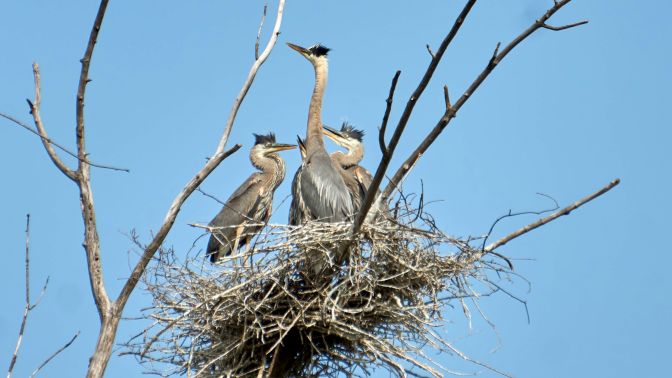
This month I’ll share with you how I drew from my inner John James Audubon while observing great blue herons.
I never for a day gave up listening to the songs of our birds, or watching their peculiar habits, or delineating them in the best way I could.
John James Audubon
My motivation for this post started at about this time last year when I was checking out a new hiking trail. It led me past a swampy pond where I happened to see a colony of blue herons. On that day, I would like to have stuck around to watch them a little longer, but the blood sucking vampire mosquitoes were eating me alive. I remember regretting not putting insect repellent in my backpack. This year I’ve come prepared.
May 11, 2023
So now I’ve returned to the pond and just as I hoped, the great blue herons are back. This time, I found a much better observation post. Instead of standing at the soggy edge of the pond like last year, I found an elevated bank where the land is cleared of tall trees making it easier for me to move around and watch the birds from different perspectives. From here, I could see three nests at the top of dead trees at the centre of the swamp.
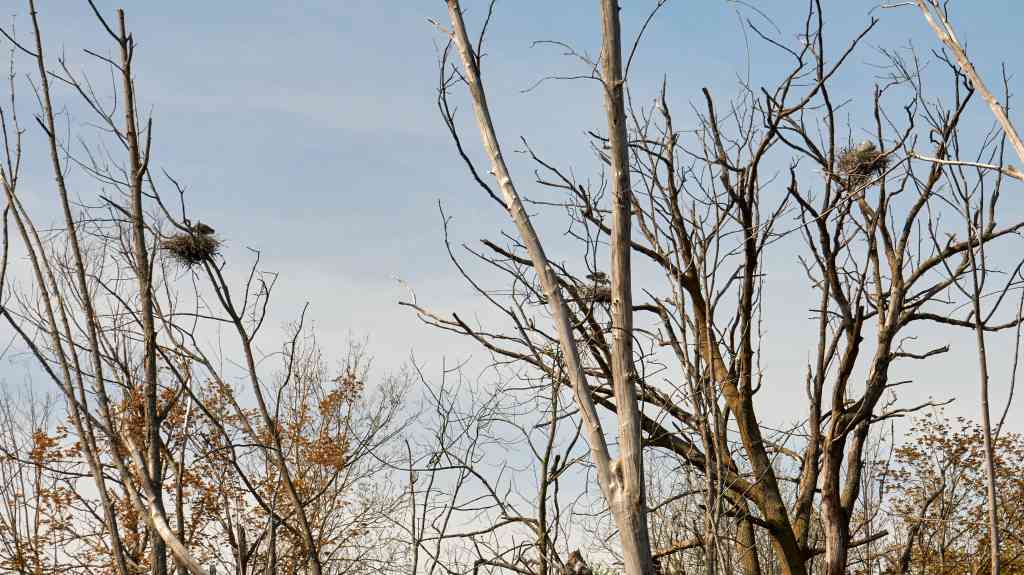
Great blue herons build their nests using a combination of materials commonly found in their habitat. Both the male and female gather sticks and tiny branches which they carefully interweave into a large platform. Additionally, they may blend in softer materials such as moss, leaves, and grass to use as a lining for warmth and comfort. Returning herons will reuse the same nests and barring devastating environmental conditions the nests can become quite large often reaching several feet in diameter.
From where I stood, I believed the eggs were still being incubated. The incubation period generally lasts 25 to 30 days.
June 15, 2023
I returned from a five week holiday break and to my delight, the babies hatched! I counted nine hatchlings, three in each nest. Watch this video and turn up the volume. What a racket; you’d think they hadn’t eaten in days, but not at all. This feeding routine seems to go in 30 minute cycles. Everyone is nice and quiet until mom comes home with the groceries. Then, pandemonium strikes. With beaks open wide and babies vying for positioning, mommy heron drops a little snack into each bill. As soon as she flies off, all are quite again but they always have a keen eye on mom’s whereabouts.
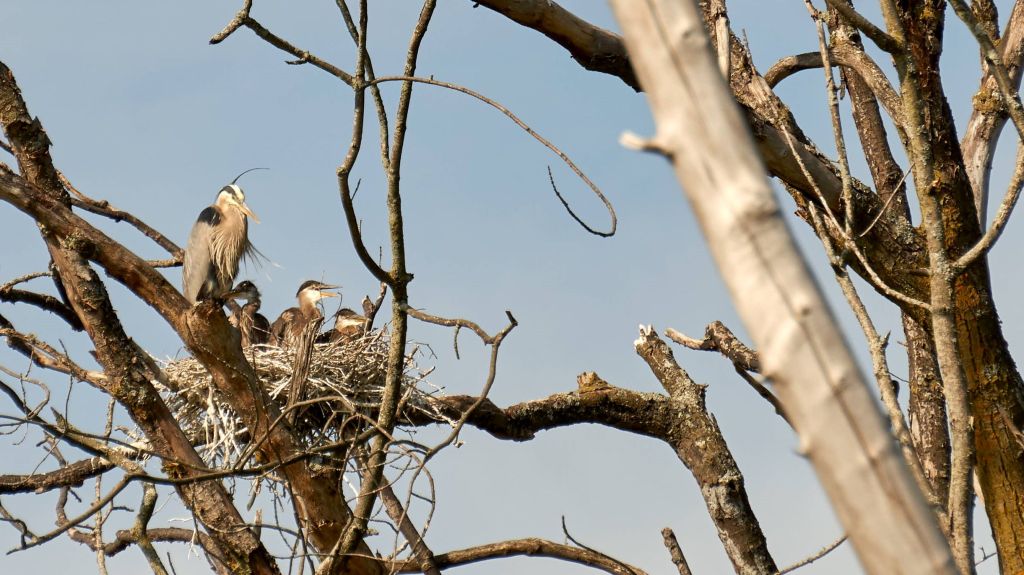
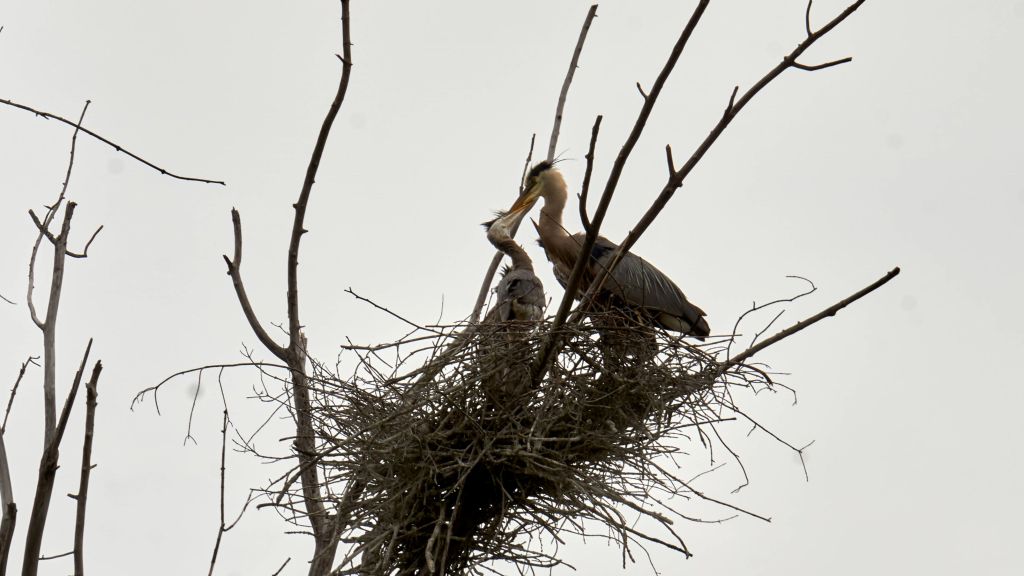
Pictured below, a female or maybe a male stands at the nest. Both are similar in appearance and are best differentiated when together. Both parents play an equal roll in caring for their young. Look closely and you’ll see a plume of long feathers extending from the back of the head. These feathers are only visible during the breeding season.
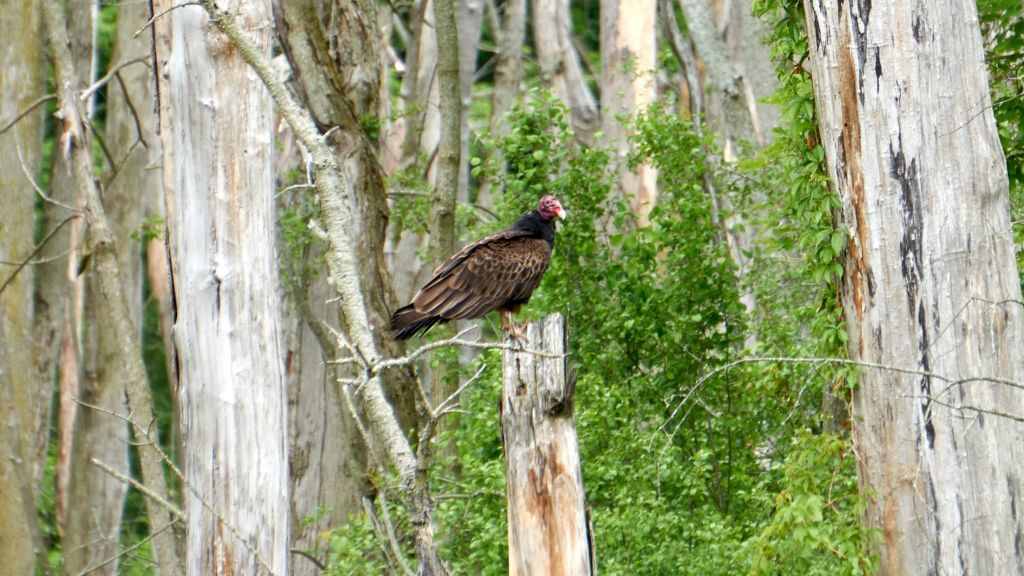
Not much later, I saw a turkey vulture land on one of the dead trees stumps. I thought for certain there would be trouble brewing. I researched and found a turkey vulture would not be a threat to the fledglings. Vultures are scavengers, primarily feeding on decaying flesh rather than actively hunting live prey.
To my surprise, the pterodactyl-like great blue herons, with their large, strong beak and sharp talons, are generally able to protect themselves adequately from potential threats such as an eagle, an owl or a hawk. A great blue heron or two would be imposing opponents. With a 2 meter wingspan, quick strike reflexes and a height of 1.5 meters the imposing bird could prove damaging to any intruder.
June 22, 2023
This is going to take a while. Crowded as they may be, the nine fledglings are still in their nests. Of course, where can they go until they learn to fly. It’s going to take several weeks before they are airborne.
I can’t imagine how they cope at the top of these barren trees during inclement weather conditions. Their parents must surely shield them with their large bodies.
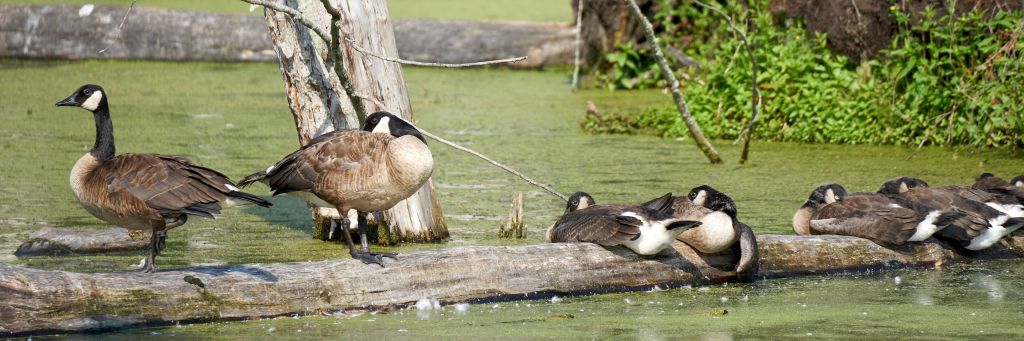
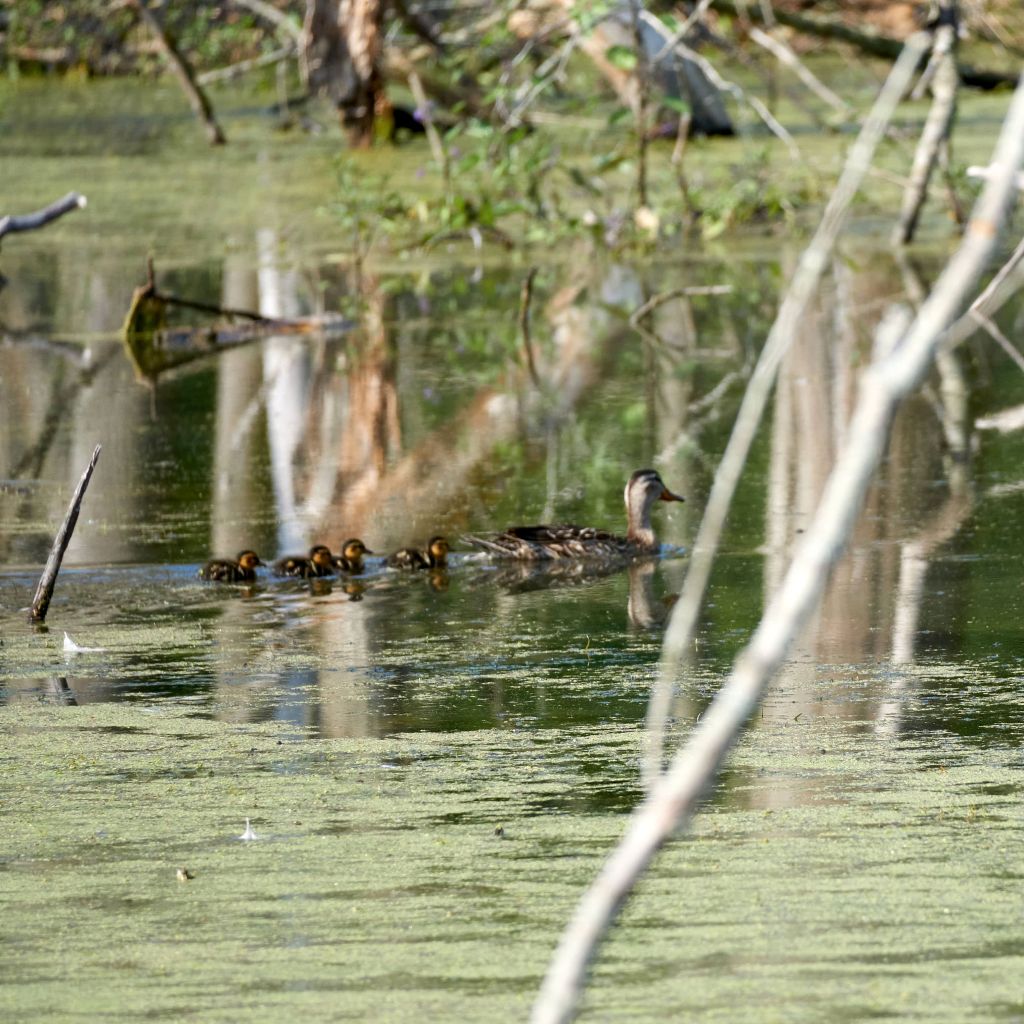
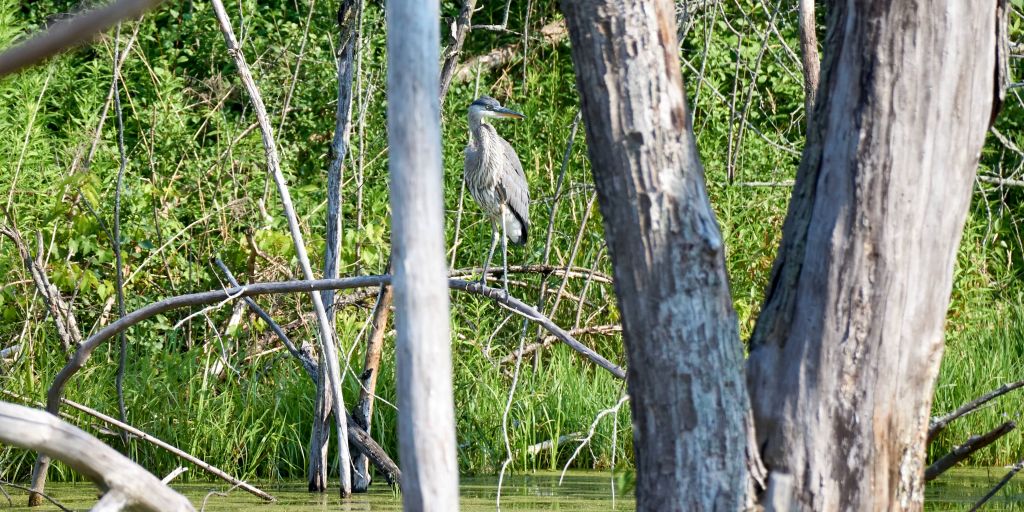
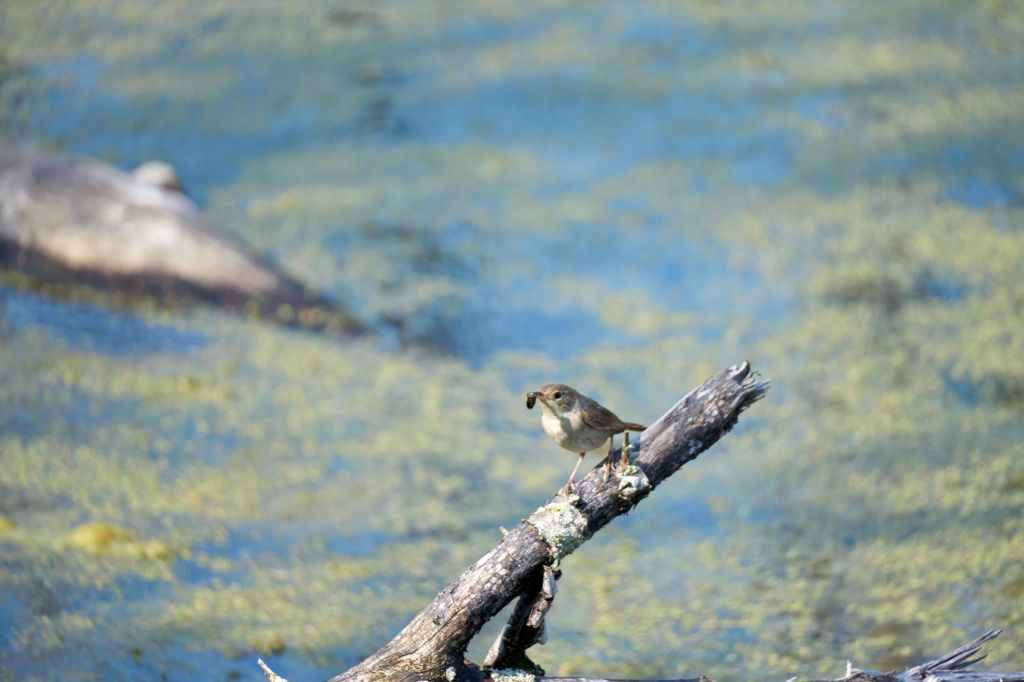
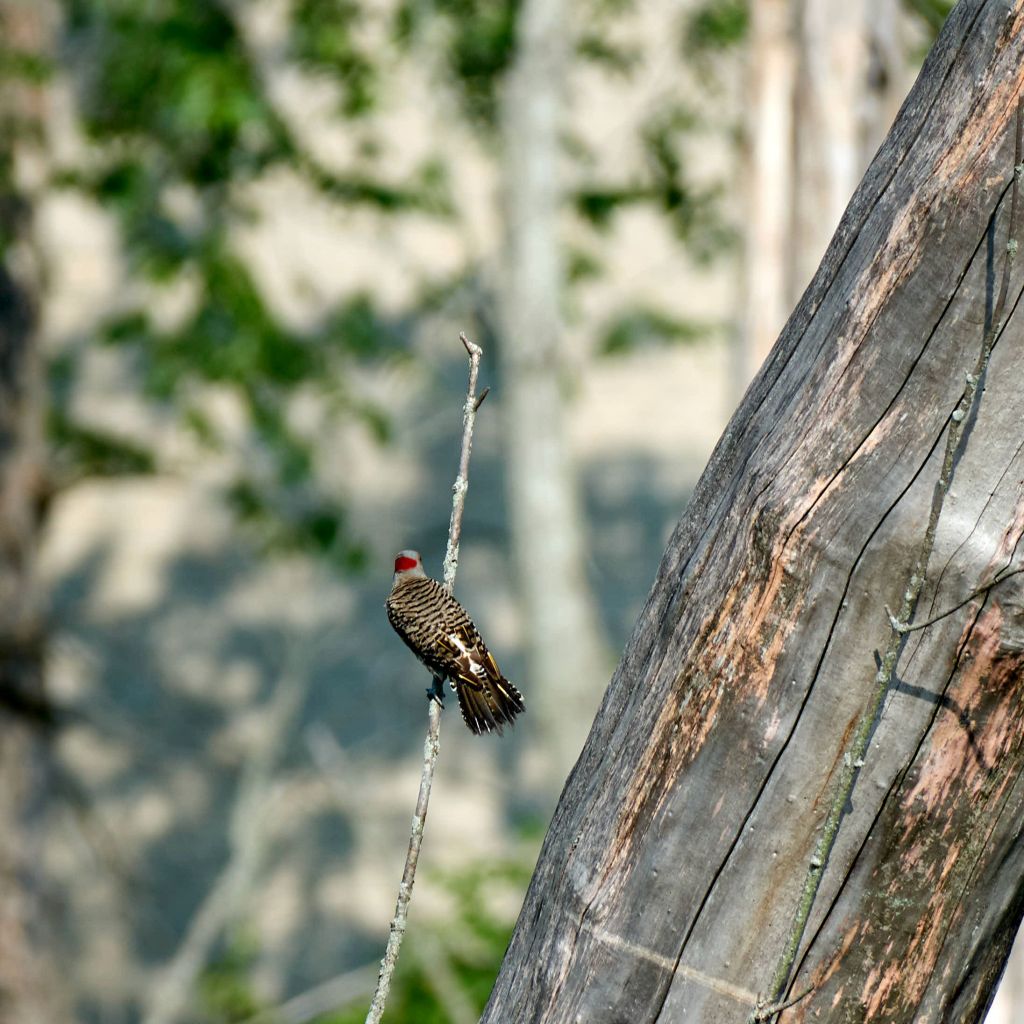
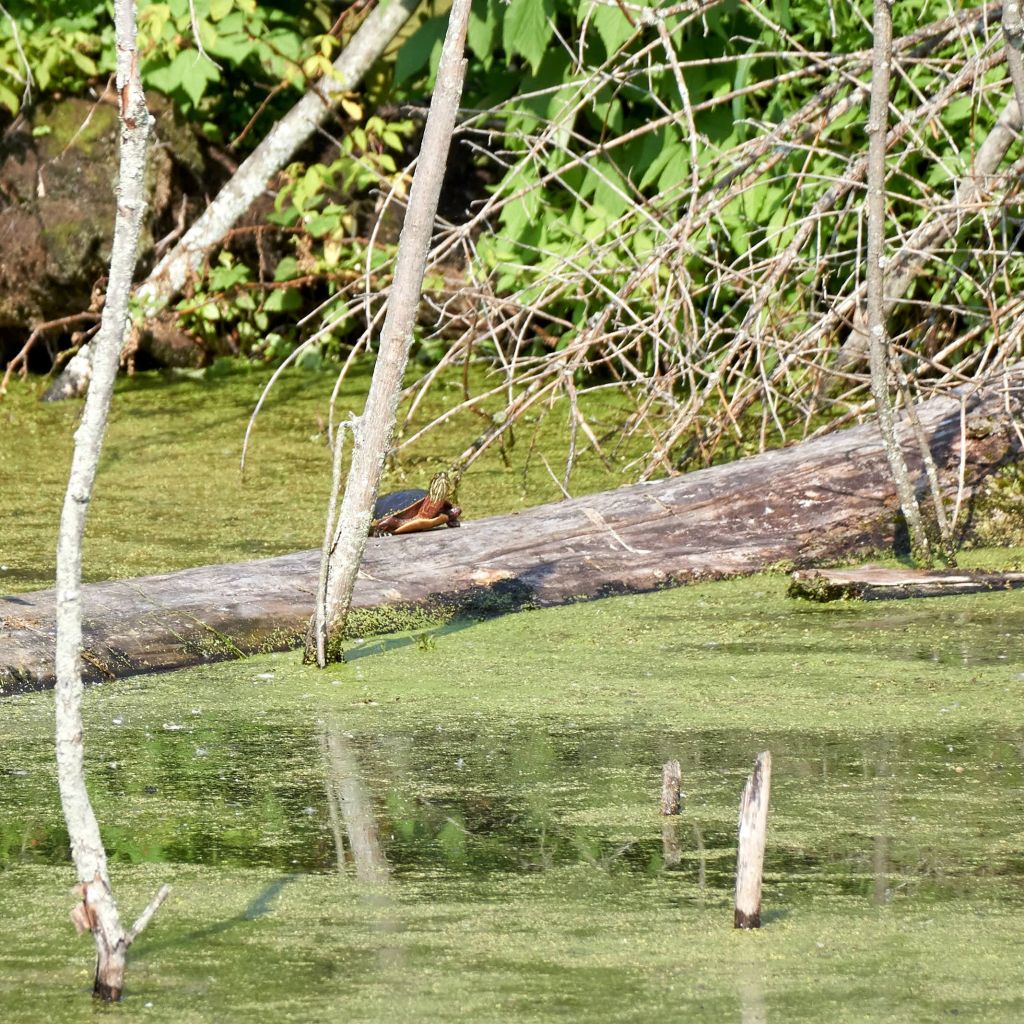
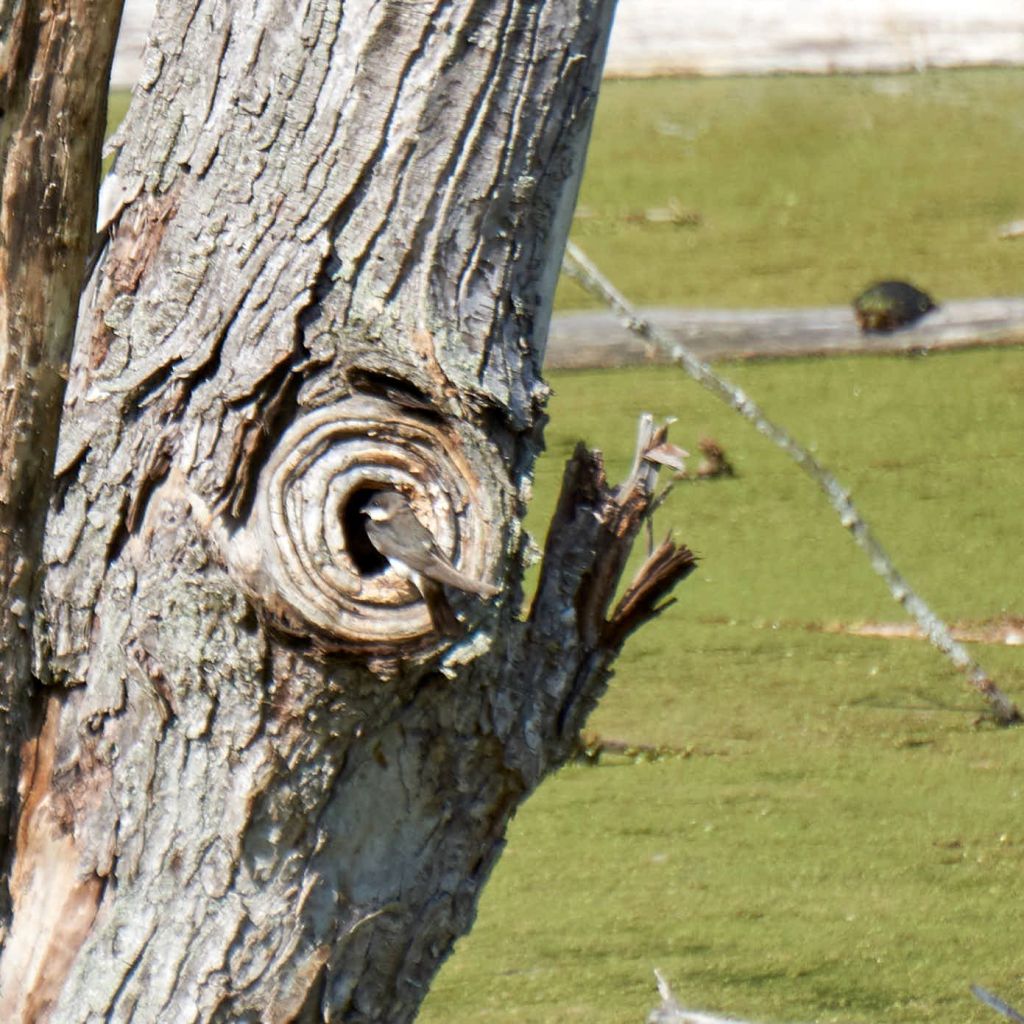
Though this green swamp may give the appearance of a dead zone, there’s a lot of wildlife present. On the water surface, I see turtles sunning themselves on fallen trees. In a far corner of the pond a gaggle of Canada geese are tending their young. A tree swallow is feeding its fledglings nesting inside one of the upright rotting trees. A duck and duckling paddled by in front of me. I even saw a beaver or maybe it was a muskrat dive underwater as I arrived today. It was all so fast, I couldn’t be sure.
June 29, 2023
It’s a sad morning. Immediately, upon my arrival, I could see one of the three nests and its fledglings were gone. What happened? The three good sized chicks were active when I last saw them. I’d like to think they’ve flown away. But I knew they were not ready for flight because the chicks in the other two nest showed no sign of being ready to leave the nest.
We experienced strong winds and rain a couple of days ago. Maybe the nest wasn’t built strong enough? Maybe a supporting branch broke? After all these are rotting trees. Could a predator have seized on an opportunity?
The two remaining nests appeared solid, and the six chicks continued to get bigger. They and their parents made it through whatever terrible incident took place.
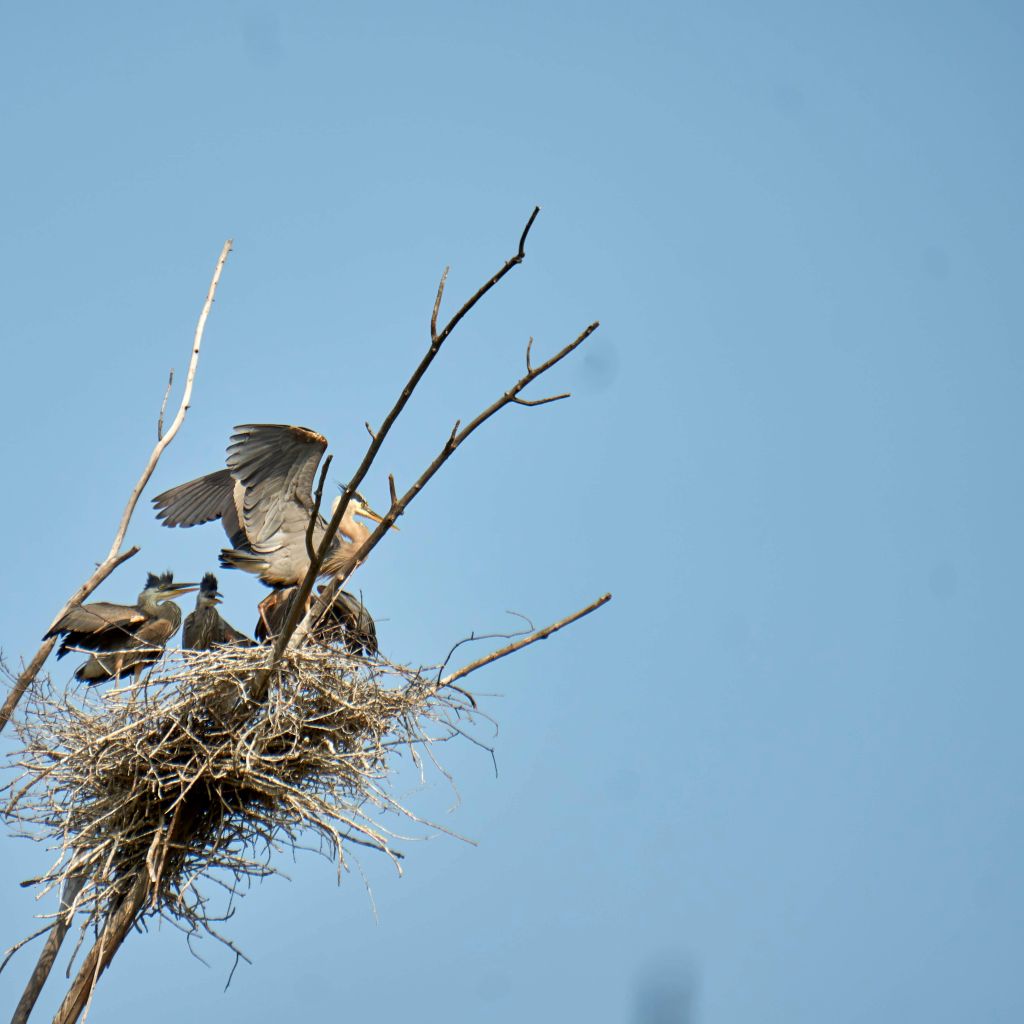
From both locations the nest bound herons extended their wings and leaned forward in preparation for their first flight. It really will be a leap of faith for the nestling. If it doesn’t get it right the first time, below lies an unwelcoming, slimy green watery swamp. Fingers crossed they all succeed.
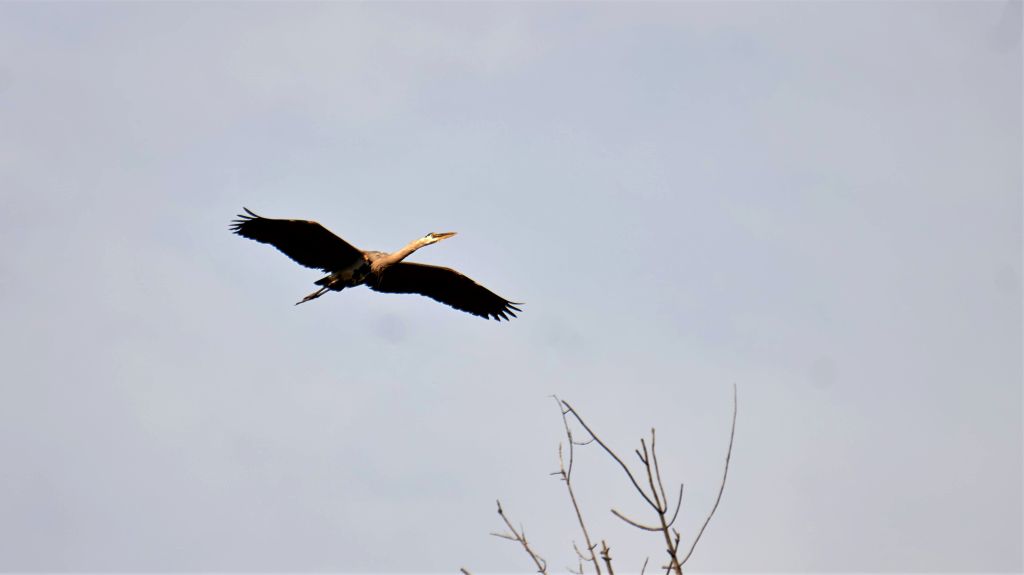
A great blue heron soars pass me on its way to feed hungry chicks.
July 6, 2023
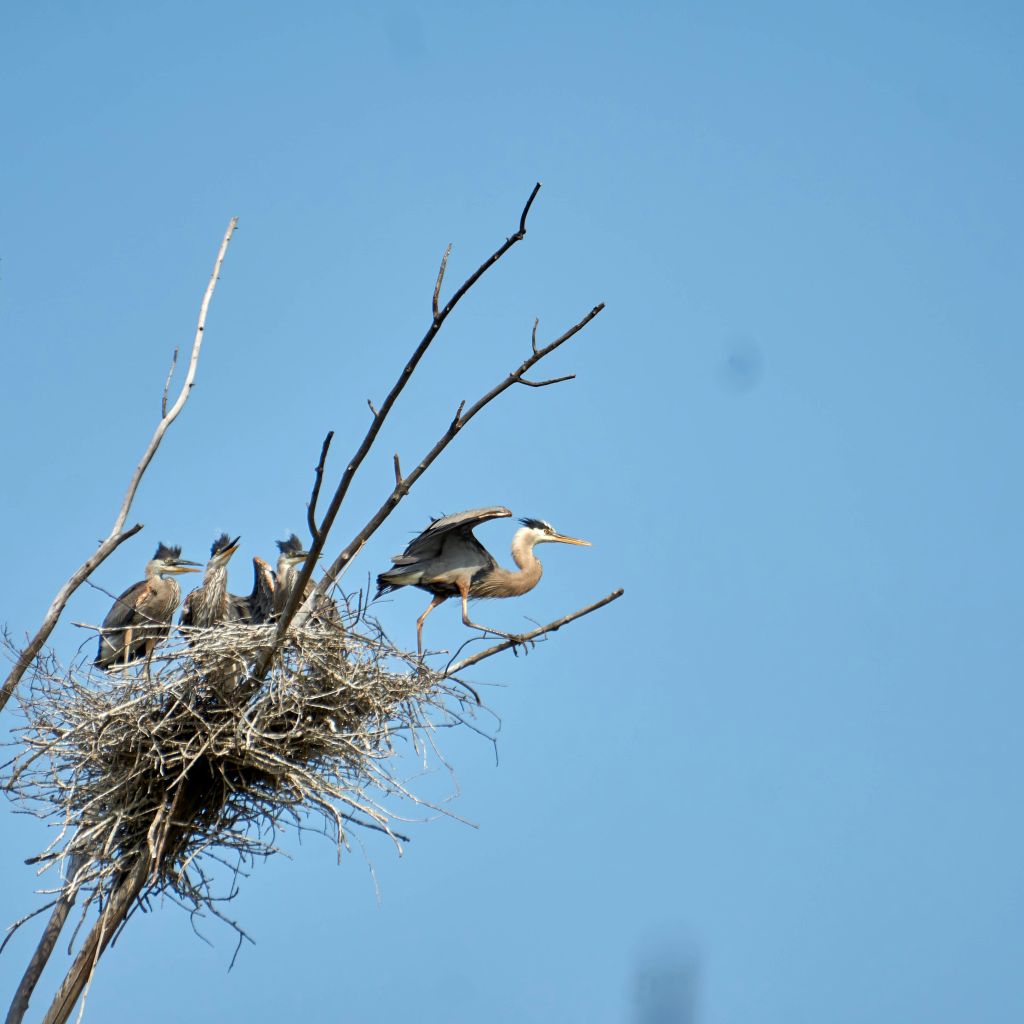
Look at next three pictures. It’s like watching baby’s first steps. I arrived just in time to see a young great blue heron fly from its nest and land on a branch in a neighbouring tree! While I watched I realized one of its nest mates had already made the journey to the same tree. The third chick didn’t leave the nest during today’s visit.
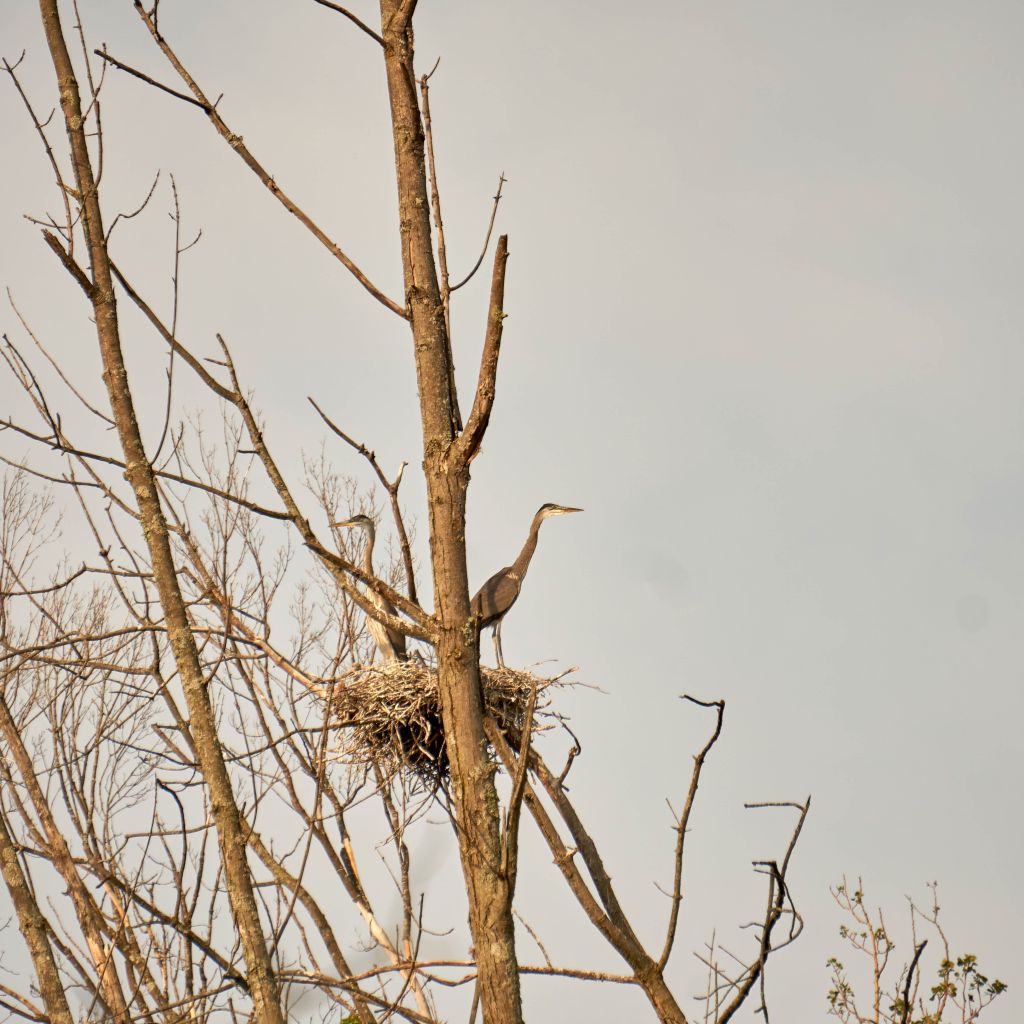
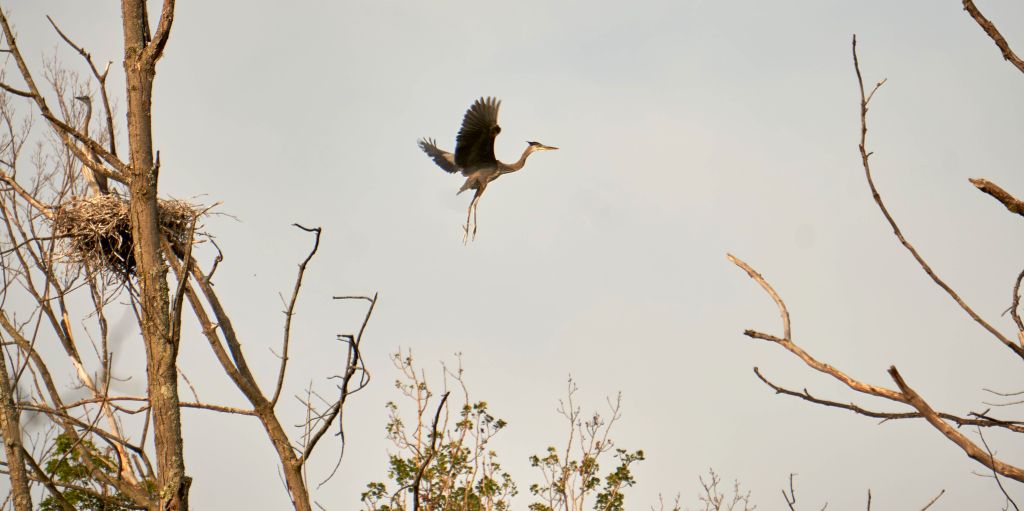
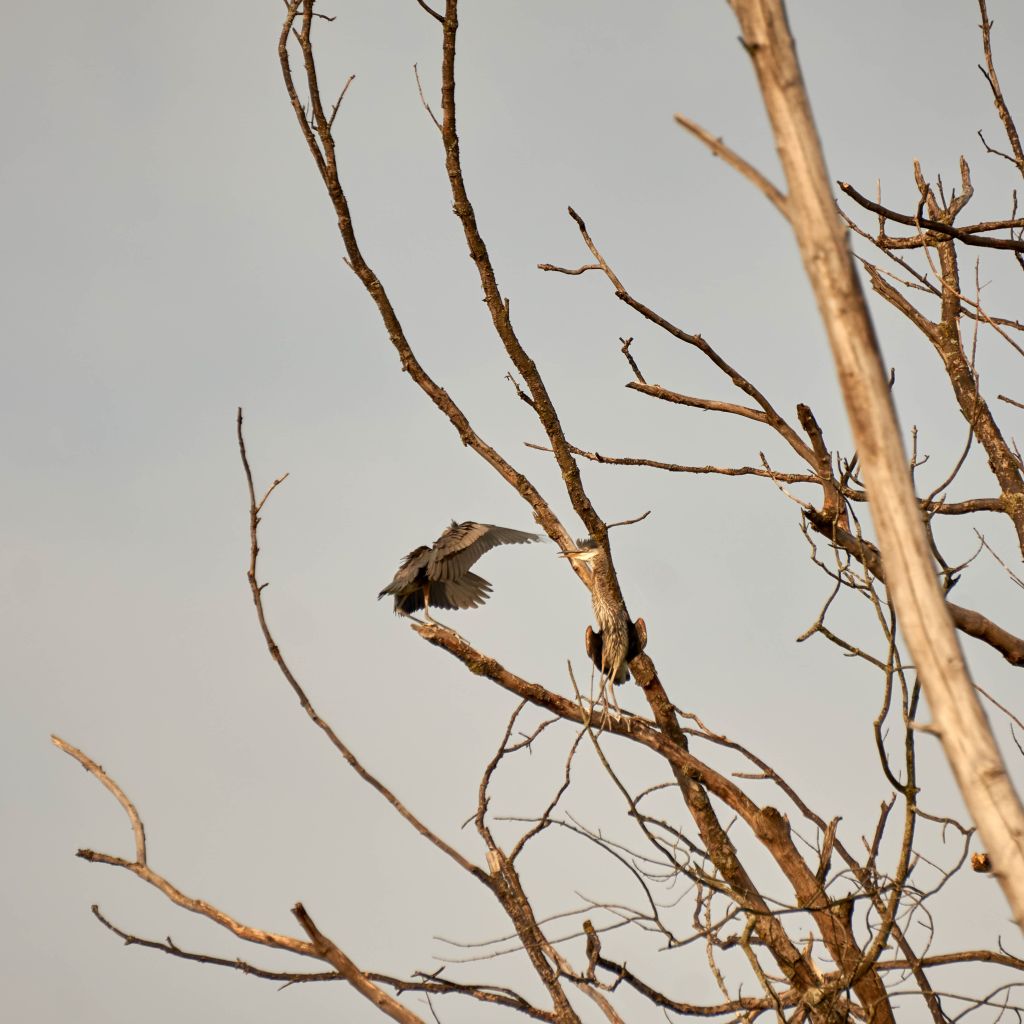
Looking over at the other three chicks, they were still there with no signs of first flight. They’re getting bigger and that nest is really getting crowded.
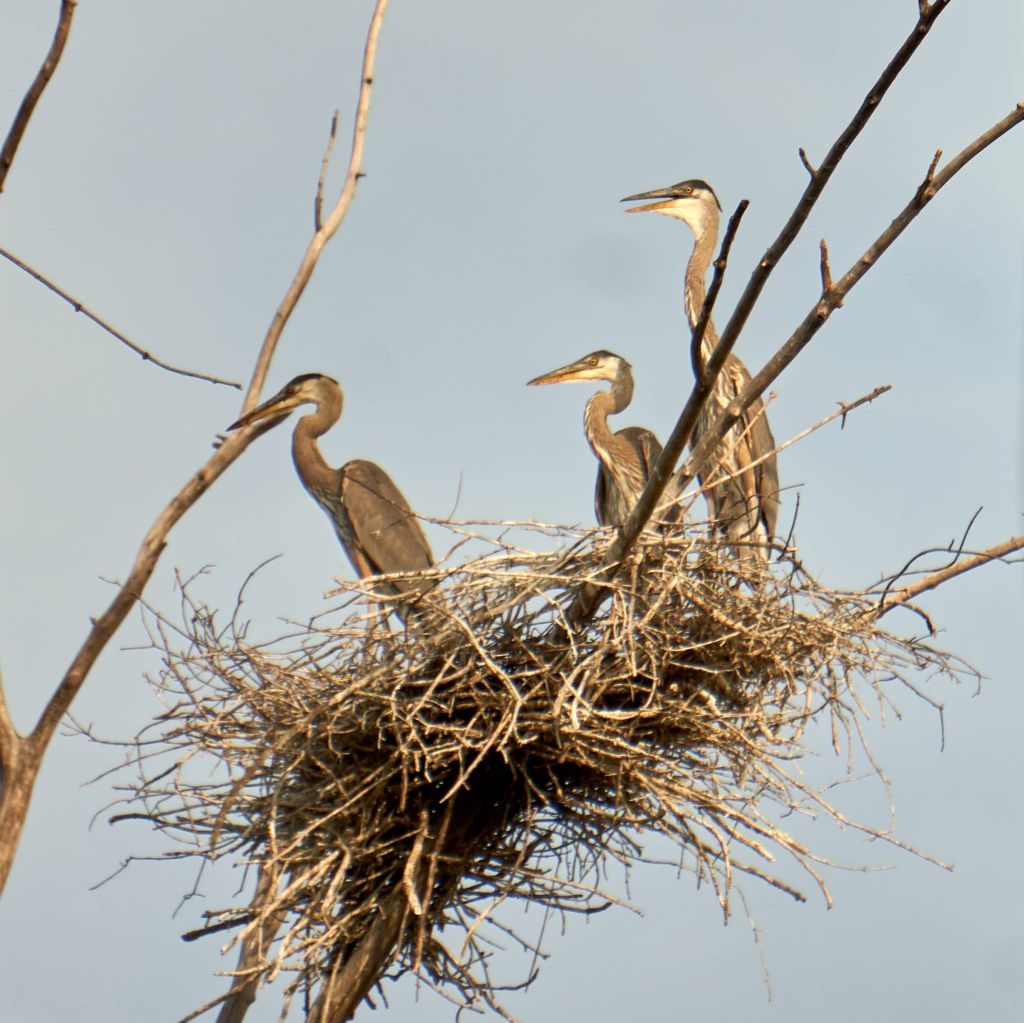
Both sets of parents were still dedicated to their offspring. They continued to supply food to them and then quickly flew off to the outer banks of the pond in search of a new catch.

July 14, 2023
My time with the great blue herons has drawn to an end. All the babies have flown the coop. As I scanned over the pond’s surface and into the trees it took a little time before I could see a few herons. When they are standing still, they seamlessly blend into the landscape. The bird’s contrast against the bright blue sky had made them easy to see. It hadn’t yet occurred to me how much their plumage is the same dull gray colour as the surrounding dead swamp trees. It’s fascinating how such large birds are easily camouflaged by their colouring.
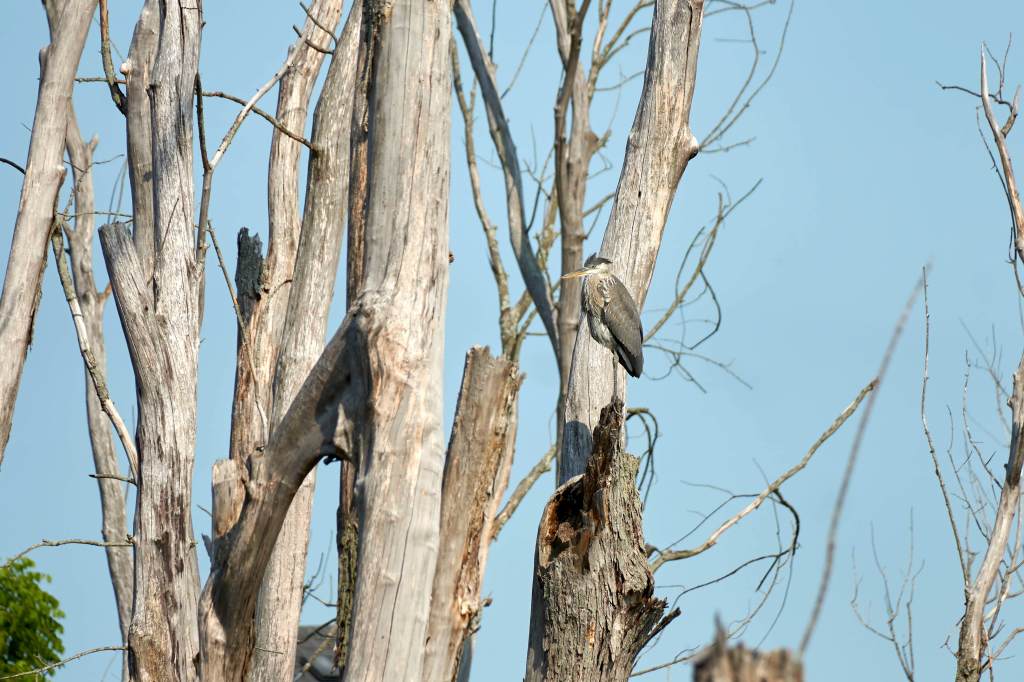
Watching them begin to fend for themselves with a parent’s cues will be the next critical lessons. At a far end of the pond, one of the young birds used a fallen tree as its fishing perch. The tree laid flat at the water surface with it’s roots and clinging muddy soil exposed. Slowly the blue heron’s head moved closer to the surface of the pond, peering into the green water as it tracked its prey. Suddenly, it’s S shaped neck quickly straightened, snapping just beneath the water surface. No catch, more practice will be essential.
These young lives have just begun. With parental guidance and natural instincts, they will, in time, become well adapted to their environment. With favourable conditions, these young birds could live to an average age of 15 to 20 years.
By fall, as temperatures cool, they’ll begin their several weeks long migratory flight south to the lower United States and Mexico. Colonies generally winter in the same geographical regions each year. Come spring, these offspring and parents will return to this nesting area. In two to three years time these young herons will have matured and will be ready to raise future generations of great blue herons.
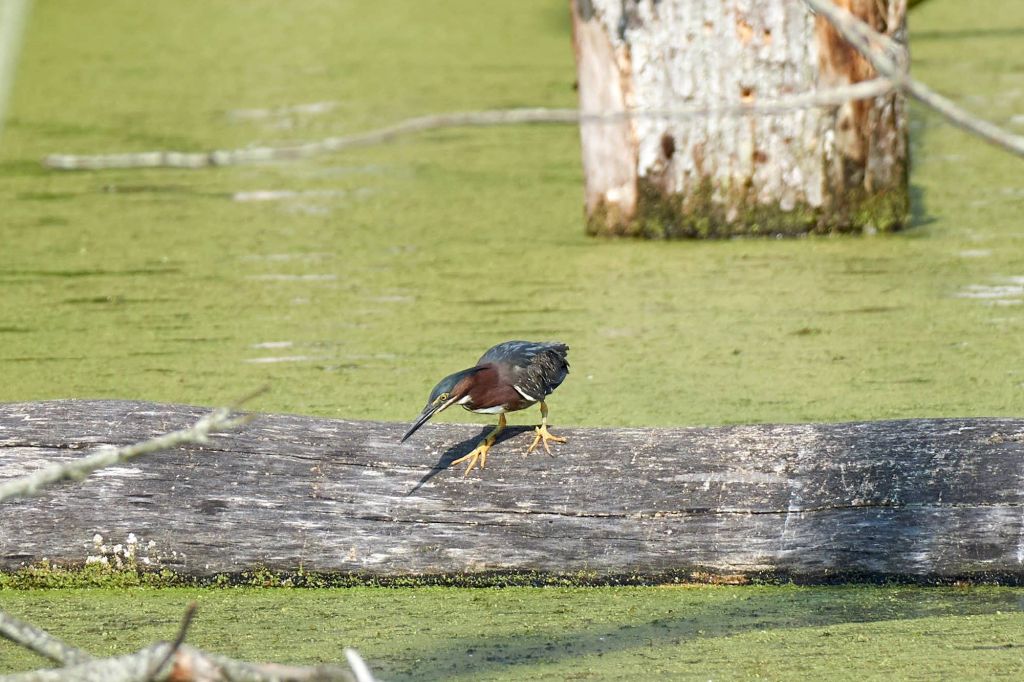
Before you go, I saw a different heron today. This one is a green heron and it’s waiting patiently for a small fish. Green herons will actually bait their prey by dropping insects, twigs or other floating items to lure its catch.

 Day Trip Hour
That’s always the downside to visiting a marshy area in the spring, is that the mosquitoes can be relentless. Glad to hear that they didn’t deter you from seeing the great blue herons. Great captures.
LikeLiked by 1 person
Bug repellent certainly made it better. On a similar note, I have a new appreciation for anyone spending time just standing in the bush to observe nature.
LikeLiked by 1 person
Wow, this is amazing, Kevin. Thanks so much for sharing your experiences with these magnificent birds, right in the GTA. I’d never heard of a green heron.
LikeLiked by 1 person
Thank, Jane. I hadn’t seen or heard of a green heron before either. I had to look it up on my Audubon app.
LikeLiked by 1 person
I really enjoyed this post. I watched a much smaller set of birds, Barn swallows hatch and fly off . You have taken a series of terrific photo of the Great blues. Thanks for sharing.
LikeLiked by 1 person
Thank you, Anne. Yes, it certainly is amazing watching mother nature at work.
LikeLiked by 1 person